Listen to this article
50/30/20 Budget vs Zero-Based Budget: Which Method Fits Your Money Habits?
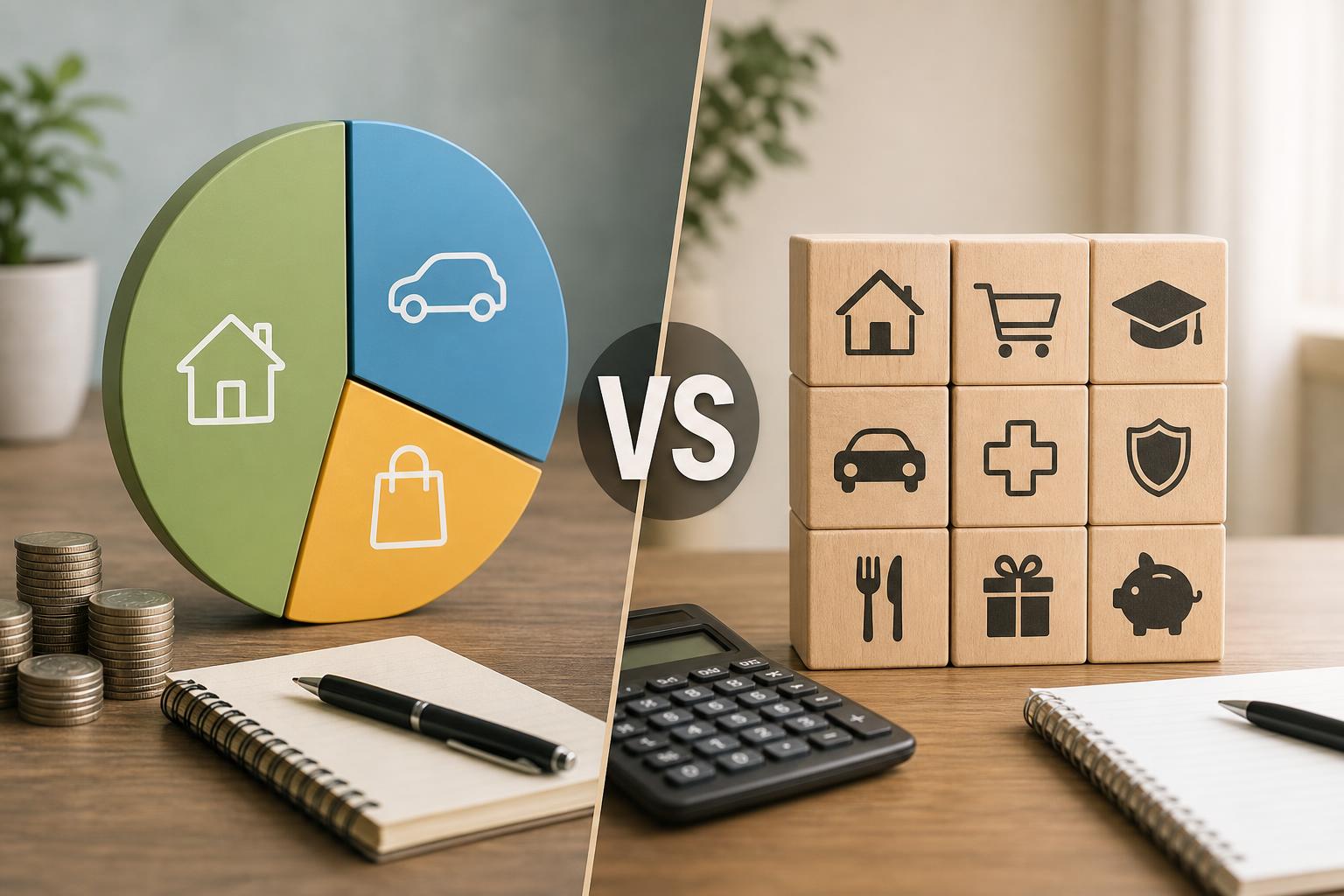
The 50/30/20 budget and the zero-based budget are two popular ways to organize your money, but they work best for different habits. The 50/30/20 rule gives you broad spending targets: 50% for needs, 30% for wants, and 20% for savings and debt repayment. A zero-based budget gives every dollar a job until income minus planned spending equals zero. Neither method is universally best. The better fit depends on how predictable your income is, how closely you want to track expenses, how much flexibility you need, and whether your main goal is simplicity, control, debt payoff, or habit building.
Key takeaways
- The 50/30/20 budget is often easier for beginners because it uses three broad categories instead of tracking every expense line by line.
- A zero-based budget offers more precision and control, which can help when you are managing tight cash flow, irregular spending, or aggressive debt payoff goals.
- The 50/30/20 rule works best when your income comfortably supports the 50/30/20 split; it may need adjustment in high-cost areas or during major life changes.
- Zero-based budgeting can be powerful, but it requires more time, more frequent updates, and a willingness to plan categories before spending.
- You can adapt either method by changing percentages, adding sinking funds, or using a simplified version that matches your habits and constraints.
Quick comparison: 50/30/20 budget vs zero-based budget
The main difference is structure. The 50/30/20 budget sorts take-home pay into three large buckets: needs, wants, and savings or debt repayment. It is designed to be simple and flexible. A zero-based budget assigns every dollar of income to a specific purpose, such as rent, groceries, transportation, emergency savings, credit card payments, subscriptions, and fun money. It is designed for control and clarity. For example, with $4,000 in monthly take-home pay, a traditional 50/30/20 split would suggest about $2,000 for needs, $1,200 for wants, and $800 for savings and extra debt repayment. In a zero-based budget, the same $4,000 might be divided across many categories until every dollar is assigned. That does not mean you spend every dollar; savings, investing, and debt payments are also jobs for your money.
How the 50/30/20 budget works
The 50/30/20 rule is a percentage-based budget. It assumes your after-tax income can be divided into three categories: Needs, usually around 50%: housing, utilities, groceries, transportation, insurance, minimum debt payments, and other essential costs. Wants, usually around 30%: restaurants, entertainment, travel, hobbies, upgrades, subscriptions, and other nonessential spending. Savings and debt repayment, usually around 20%: emergency savings, retirement contributions, extra debt payments, short-term goals, and other future-focused uses. The biggest strength of the 50/30/20 method is that it reduces decision fatigue. You do not need a category for every small purchase as long as your overall buckets stay reasonable. This makes it one of the best budgeting methods for beginners who want a simple framework. The tradeoff is that broad categories can hide problem areas. If your “wants” spending is too high, you may still need to break it down to see whether dining out, shopping, travel, or subscriptions are driving the issue.
50/30/20 rule pros and cons
Pros: The 50/30/20 rule is simple, memorable, and flexible. It helps beginners see whether their income is balanced across essentials, lifestyle spending, and future goals. It can also be useful for quick budget checkups because you can compare your current spending to the target percentages without building a detailed plan from scratch. Cons: The method may not fit every household. In high-cost housing markets, needs may exceed 50% even with careful spending. If you have a low income, variable income, high medical costs, childcare costs, or urgent debt, the standard split may feel unrealistic. It also does not automatically tell you which specific expenses to cut or how to handle irregular bills. When to adapt it: Consider changing the percentages if your real life does not match the standard assumptions. For example, a temporary 60/20/20 budget may be more realistic if necessities are high. A 50/20/30 split may fit someone prioritizing travel less and debt payoff more. The point is not to force perfect percentages; it is to create a clear, sustainable direction.
How a zero-based budget works
A zero-based budget starts with expected income and subtracts planned uses until the remaining amount is zero. If you expect $4,000 this month, you assign all $4,000 across bills, spending, savings, giving, investing, and debt repayment. The goal is intentional planning, not spending down your account. This method often works well for people who want to know exactly where their money is going. It can be especially helpful if your budget feels tight, you are paying off debt, you have irregular expenses, or you want to build sinking funds for costs like car repairs, holidays, insurance premiums, or annual subscriptions. The tradeoff is maintenance. A zero-based budget usually requires more detail and regular adjustments. If income changes, a bill is higher than expected, or an emergency happens, you need to move money between categories. That can be empowering for some people and exhausting for others.
Zero-based budget pros and cons
Pros: A zero-based budget gives you a detailed plan and can reduce vague spending. It is useful for spotting leaks, planning ahead for irregular expenses, and directing extra money toward goals. It can also make tradeoffs more visible: if you add more to dining out, you may need to reduce shopping, savings, or another category. Cons: It can feel restrictive if you prefer broad flexibility. It may also be difficult if you do not have a clear view of your upcoming expenses or if tracking every category creates stress. For beginners, the first version can be too detailed, which sometimes leads people to abandon the system before they learn from it. When to adapt it: Start with fewer categories if a full zero-based budget feels overwhelming. You might use broad categories such as housing, food, transportation, debt, savings, and personal spending before adding detail. You can also use weekly check-ins instead of daily tracking if that better matches your habits.
How to choose a budget method for your habits
Choose the 50/30/20 budget if you want a simple starting point, have fairly predictable income, and prefer flexible guidelines over detailed tracking. It is also a good fit if your finances are generally stable but you want to check whether your spending is aligned with your goals. Choose a zero-based budget if you want more control, need to manage tight cash flow, are working on debt payoff, or often wonder where your money went. It may also fit well if you like planning and do not mind adjusting categories during the month. If neither feels perfect, combine them. You can use 50/30/20 as the big-picture target and zero-based budgeting for the categories that need closer attention. For example, you might keep your overall savings target at 20% while using zero-based categories for groceries, gas, debt payments, and irregular bills. askForay can help you explore these kinds of budget scenarios educationally, so you can compare tradeoffs before choosing a system to test.
FAQs
Is the 50/30/20 budget or zero-based budget better for beginners?
The 50/30/20 budget is often easier for beginners because it is simple and flexible. However, a beginner who needs close control over spending or debt payoff may prefer a simplified zero-based budget. The best choice depends on your habits, income predictability, and how much detail you are willing to manage.
Can I use the 50/30/20 budget with irregular income?
Yes, but it may require adjustments. You can base the percentages on a conservative average income, your lowest expected month, or money already received. If income varies widely, a zero-based approach may help you prioritize essentials first and assign money as it comes in.
Does a zero-based budget mean I spend all my money?
No. In zero-based budgeting, every dollar gets a job, but some of those jobs can be saving, investing, building an emergency fund, or making extra debt payments. The goal is to avoid unplanned money sitting without a purpose, not to spend everything.
Plan your next money move
Use askForay guides and calculators to compare options before you commit.

Leave a Reply