Listen to this article
50/30/20 vs Zero-Based Budgeting: Which Budget Method Fits Your Life?
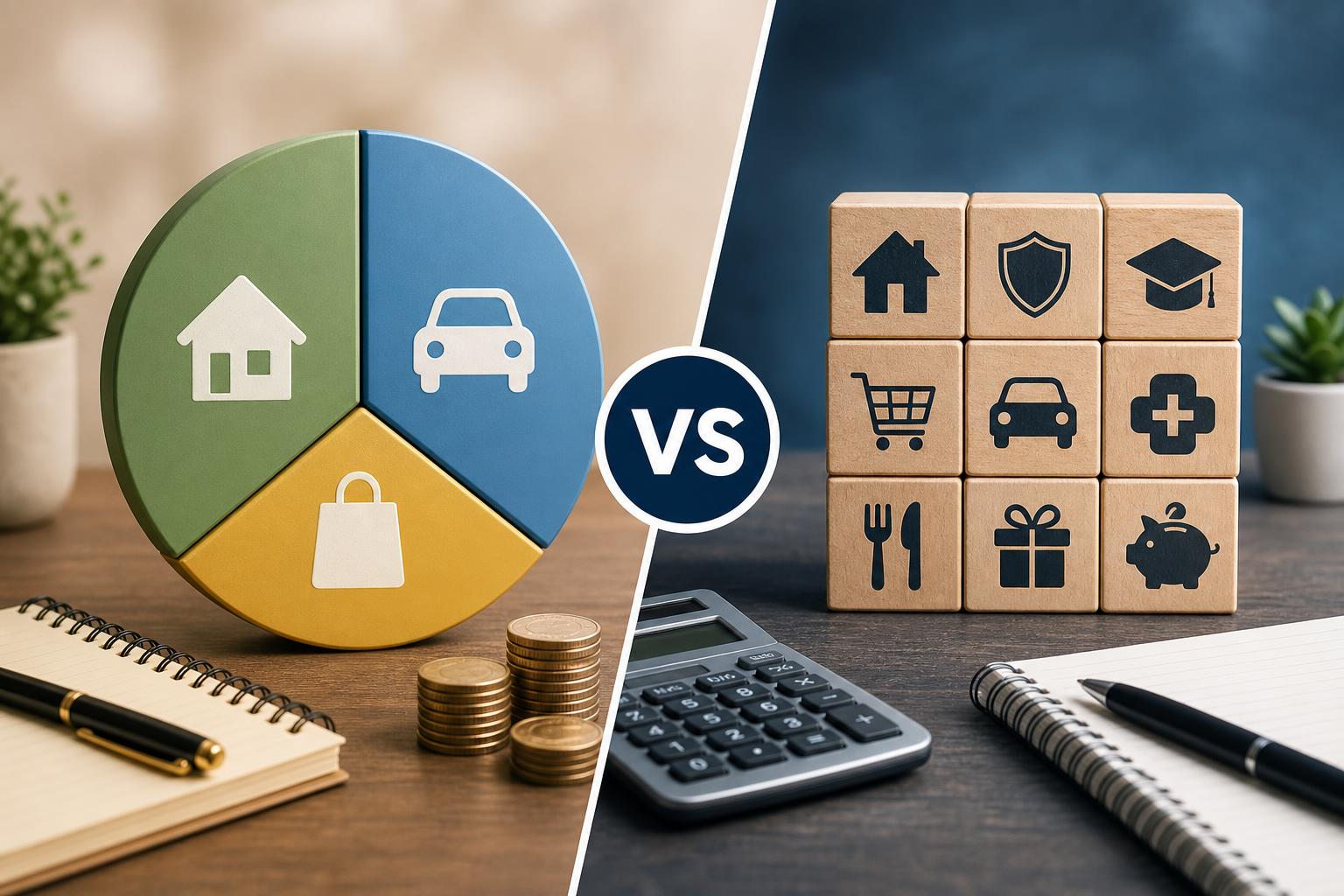
When comparing 50 30 20 vs zero based budgeting, the main difference is flexibility versus precision. The 50/30/20 budget gives broad percentage targets for needs, wants, and savings or debt payoff, while zero-based budgeting asks you to assign every dollar of income to a specific job before the month begins. Neither method is universally best. The right fit depends on how predictable your income is, how much detail you want, how tight your cash flow feels, and whether your current goal is building awareness, controlling spending, paying down debt, or creating a simpler long-term routine.
Key takeaways
- The 50/30/20 budget is a percentage-based framework that can be easier for beginners because it uses broad categories: 50% needs, 30% wants, and 20% savings or debt payoff.
- Zero-based budgeting is more detailed: every dollar of expected income is assigned to expenses, savings, debt payments, or other priorities until the plan balances to zero.
- A 50/30/20 budget can be helpful when your income is stable and your expenses fit reasonably close to the percentages, but it may be harder to use in high-cost areas or during aggressive debt payoff.
- A zero-based budget can provide stronger control and visibility, especially when money feels tight, but it requires more tracking and regular adjustments.
- The best budgeting method for beginners is often the one they will actually keep using, even if they later customize it or combine features from both systems.
50/30/20 vs zero based budgeting: the core difference
A 50/30/20 budget is a percentage budget. It suggests dividing after-tax income into three broad buckets: 50% for needs, 30% for wants, and 20% for savings, extra debt payoff, or other future-focused goals. For example, if take-home pay is $4,000 per month, a simple 50/30/20 split would point to about $2,000 for needs, $1,200 for wants, and $800 for savings or debt payoff. A zero-based budget works differently. Instead of starting with preset percentages, you list your expected income and assign each dollar to a category: rent, groceries, utilities, transportation, minimum debt payments, emergency savings, subscriptions, fun money, and so on. The goal is for income minus planned expenses, savings, and debt payments to equal zero. A zero balance does not mean spending everything; it means every dollar has a planned purpose. The practical tradeoff is simplicity versus specificity. The 50/30/20 method gives a quick structure for decision-making. Zero-based budgeting gives a more detailed plan for the month ahead.
How the 50/30/20 budget works, plus pros and cons
The 50/30/20 budget assumes your spending can be meaningfully grouped into needs, wants, and savings or debt payoff. Needs usually include housing, basic utilities, groceries, insurance, minimum debt payments, and essential transportation. Wants include dining out, entertainment, travel, upgrades, and nonessential shopping. The 20% category usually includes emergency savings, retirement contributions, sinking funds, investing, and extra debt payments. The main strength of this method is that it is easy to understand. It can be a strong starting point for someone who wants a budgeting methods comparison but does not want to track dozens of categories. It also helps reveal whether fixed costs are crowding out savings. If needs are taking 65% of take-home pay, the budget shows that there may be limited room for wants and goals without adjusting something. The drawbacks are important. In expensive cities, for families with childcare costs, or for people with lower incomes, 50% for needs may not be realistic. The method can also feel too loose if you overspend inside broad categories. For example, staying under the 30% wants limit still requires choices among restaurants, subscriptions, hobbies, and shopping. The 50/30/20 budget pros and cons depend heavily on income level, cost of living, debt load, and how much structure you need.
How zero-based budgeting works, plus pros and cons
Zero-based budgeting starts with the money you expect to receive during a specific period, often one month or one paycheck. Then you assign that money to categories until nothing is left unplanned. A simple version might include rent, utilities, groceries, gas, insurance, minimum debt payments, emergency fund contribution, extra loan payment, clothing, medical costs, personal spending, and a small buffer. The biggest benefit is visibility. A zero-based budget can show exactly where money is going before it is spent. This can help people who want tighter control, are trying to reduce overspending, are managing irregular expenses, or are working toward a specific goal such as paying off credit card debt or building a starter emergency fund. The downside is maintenance. This method requires more frequent updates when bills change, income varies, or unexpected expenses appear. Some people find it motivating; others find it too detailed. A zero-based budget vs percentage budget comparison often comes down to behavior: if broad guardrails are enough, percentages may work well; if money tends to disappear without a plan, zero-based budgeting may provide more useful structure.
Who the 50/30/20 method may fit best
The 50/30/20 method may fit people who want a simple budgeting system with fewer categories. It can work well if your income is predictable, your essential expenses are not too high relative to income, and your main goal is to create a sustainable balance between bills, lifestyle spending, and savings. It may also be useful for beginners who feel overwhelmed by traditional line-item budgeting. Instead of deciding on 25 separate categories immediately, you can start by calculating your current needs, wants, and savings percentages. That snapshot can help you see whether your spending pattern matches your priorities. However, this method may need customization. For example, someone paying off high-interest debt may temporarily choose a lower wants percentage and a higher debt payoff percentage. Someone in a high-rent area may use the framework as a diagnostic tool rather than a strict rule. The percentages are guidelines, not guarantees that every household can or should follow them exactly.
Who zero-based budgeting may fit best
Zero-based budgeting may fit people who want a more hands-on plan, especially when cash flow feels tight or financial goals require close attention. It can help if you are trying to stop overdrafts, prepare for irregular bills, reduce credit card reliance, or decide where extra dollars should go each month. This method can also be helpful for variable income. Instead of assuming the same monthly budget, you can build the plan around the income you have or reasonably expect. Some people use a conservative income estimate, fund essentials first, and then assign additional money to goals if it arrives. The tradeoff is time and emotional bandwidth. A zero-based budget asks you to make more decisions upfront and review the plan regularly. If that feels stressful, you might simplify categories, budget by paycheck, or use zero-based budgeting only for areas where spending tends to get away from you.
How to choose a budget method
To decide between 50 30 20 vs zero based budgeting, start with your real-life constraints rather than the idea of a perfect budget. Ask: Is my income stable or variable? Are my essential expenses already high? Do I need a quick framework or a detailed spending plan? Am I trying to build awareness, free up cash, pay down debt, or maintain a routine I can stick with? If you are new to budgeting and want a fast starting point, the 50/30/20 method may be easier. If you need more control or are trying to solve a specific cash-flow problem, zero-based budgeting may be more useful. You can also combine them: use 50/30/20 as a high-level target, then use zero-based budgeting inside each category to decide exactly where the money goes. For major choices, such as changing debt payoff strategies, reducing retirement contributions, buying a home, or making large financial commitments, consider your full financial picture and, when appropriate, guidance from a qualified professional. Budgeting tools are educational aids, not one-size-fits-all instructions.
FAQs
Is 50/30/20 or zero-based budgeting better for beginners?
The best budgeting method for beginners depends on what feels usable. The 50/30/20 budget may be easier if you want simple guidelines and fewer categories. Zero-based budgeting may be better if you need a detailed plan, want to prevent overspending, or are managing tight cash flow. Many beginners start simple and add detail over time.
What if my needs are more than 50% of my income?
That is common, especially with high housing costs, childcare, medical expenses, transportation needs, or lower income. In that case, the 50/30/20 method can still be used as a comparison tool, but the percentages may need adjustment. You might look for realistic changes in flexible spending, income, debt payments, or longer-term fixed costs, depending on your situation.
Can a zero-based budget work with irregular income?
Yes, but it usually requires conservative planning. One approach is to budget based on money already received or a lower expected income amount, fund essentials first, and then assign additional income when it arrives. A buffer or emergency fund can also help smooth uneven months, though the right approach depends on your cash flow and obligations.
Plan your next money move
Use askForay guides and calculators to compare options before you commit.

Leave a Reply