
Listen to this article
Weekly Spending Plan Template: A Simple Way to Budget Between Paychecks
A monthly budget can show the big picture, but it may feel too broad when your main challenge is getting through the next seven days without overspending. A weekly spending plan template breaks your money into smaller, more manageable decisions: what income is available this week, which bills are due, what you need for essentials like groceries and transportation, and how much room you have for flexible spending. This template is educational, not individualized financial advice, and works best when you adjust it around your pay schedule, bill due dates, goals, and real-life constraints.
Key takeaways
- A weekly spending plan helps translate a monthly budget into near-term spending choices you can review every few days.
- Start with money actually available this week, then subtract bills, essentials, debt payments, savings transfers, and a small buffer before deciding on flexible spending.
- Useful weekly categories include groceries, transportation, bills, debt payments, savings, personal spending, and buffer money.
- A weekly spending tracker can help you spot patterns, such as underestimating food costs or forgetting irregular bills.
- If you are budgeting paycheck to paycheck, weekly cash flow planning can help you prioritize due dates and reduce surprise shortfalls.
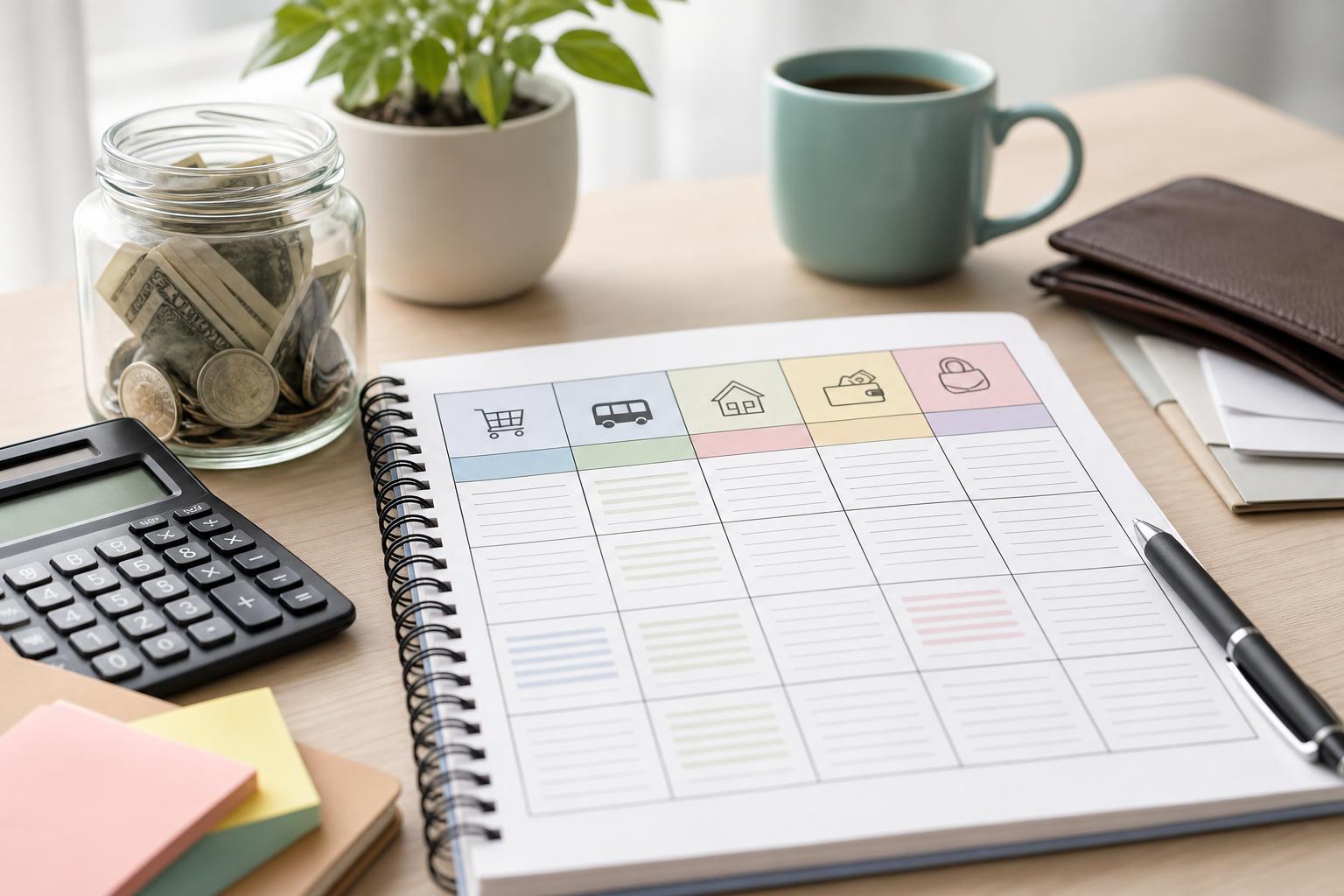
Weekly Spending Plan Template
Use this weekly budget template at the start of each week or each payday period. If your pay schedule does not match a Monday-to-Sunday week, define your “week” as the next seven days or the days until your next paycheck. Template: 1. Week covered: ____________________ 2. Starting available balance: $__________ 3. Income expected this week: $__________ 4. Total money available this week: $__________ Required bills due this week: – Rent or mortgage portion: $__________ – Utilities: $__________ – Phone or internet: $__________ – Insurance: $__________ – Subscriptions or memberships: $__________ – Other bills: $__________ Total bills due: $__________ Essential weekly spending: – Groceries: $__________ – Transportation, gas, transit, parking, or rideshare: $__________ – Childcare or family needs: $__________ – Medical or pharmacy costs: $__________ – Household basics: $__________ Total essentials: $__________ Financial priorities: – Minimum debt payments due this week: $__________ – Extra debt payoff, if planned: $__________ – Savings transfer or emergency fund: $__________ – Sinking fund for upcoming costs: $__________ Total financial priorities: $__________ Buffer and flexible spending: – Buffer money for surprises: $__________ – Eating out or coffee: $__________ – Entertainment: $__________ – Clothing or personal care: $__________ – Miscellaneous: $__________ Total flexible spending: $__________ Weekly check: Total money available minus bills, essentials, financial priorities, buffer, and flexible spending = $__________ If the result is negative, reduce flexible spending first, then review timing, nonessential purchases, and whether any bills can be moved without fees. If the result is positive, decide whether to keep it as extra buffer, move it to savings, or apply it toward a priority debt or upcoming expense.
How to Budget Weekly Expenses Step by Step
To build your weekly spending plan, start with cash flow rather than your ideal budget. Cash flow means the money coming in and going out during a specific period. This is especially helpful if bills cluster around certain dates or if you are paid weekly, biweekly, irregularly, or close to when major bills are due. Step 1: Choose the planning period. Pick the next seven days, the current calendar week, or the days until your next paycheck. Step 2: List money available. Include your current checking balance and any income you are confident will arrive during the week. Be careful with pending deposits or uncertain income. Step 3: List bills by due date. Include only the bills due during the planning period, not every monthly bill unless it must be paid this week. Step 4: Estimate essentials. Groceries, transportation, prescriptions, and household basics often vary week to week. Use recent spending as a starting point instead of guessing too low. Step 5: Add a buffer. Even a small buffer can reduce the chance that one unexpected expense disrupts the whole plan. The right amount depends on your income, obligations, and risk tolerance. Step 6: Decide on flexible spending. After required costs and priorities are covered, divide what remains into categories such as dining out, entertainment, personal items, and miscellaneous purchases. Step 7: Review midweek. A weekly spending tracker works best when you check actual spending at least once before the week ends.
Example Weekly Cash Flow Planning Scenario
Here is a simple example to show how the template works. This is not a recommendation for how much any one person should spend; it is only an illustration. Example week: – Starting available balance: $150 – Paycheck expected this week: $900 – Total available: $1,050 Bills due this week: – Phone: $75 – Car insurance: $120 – Streaming subscription: $15 Total bills: $210 Essential spending: – Groceries: $125 – Gas and parking: $65 – Pharmacy: $20 Total essentials: $210 Financial priorities: – Credit card minimum payment: $50 – Emergency savings transfer: $25 Total priorities: $75 Buffer and flexible spending: – Buffer: $75 – Eating out: $40 – Entertainment: $25 – Personal or miscellaneous: $40 Total buffer and flexible: $180 Weekly result: $1,050 available – $210 bills – $210 essentials – $75 priorities – $180 buffer and flexible spending = $375 remaining. In this example, the remaining $375 might need to be held for next week’s rent, another upcoming bill, or a future paycheck gap. Weekly planning should connect to the broader month so that extra money in one week is not accidentally spent before a larger bill arrives.
Paycheck to Paycheck Budgeting Plan Tips
When money feels tight, a weekly spending plan can help you prioritize timing. The goal is not to create a perfect budget; it is to make the next set of decisions clearer. Helpful practices include: – Sort bills by due date, not just by category. – Identify which expenses must be paid this week and which are coming later in the month. – Keep flexible categories simple so the plan is easy to maintain. – Use realistic grocery and transportation numbers based on recent receipts or bank transactions. – Build a small buffer category before assigning every remaining dollar to optional spending. – Track daily spending for categories that tend to leak money, such as convenience food, rideshare, or impulse purchases. If your plan shows a shortfall, avoid assuming the problem is personal failure. Shortfalls can come from income timing, high fixed expenses, irregular bills, debt payments, or underestimating essentials. Options might include cutting or delaying nonessential spending, changing bill due dates, using community resources, comparing debt payoff approaches, or speaking with a qualified nonprofit credit counselor or financial professional for major decisions.
How to Use a Weekly Spending Tracker
A weekly spending tracker compares what you planned to spend with what actually happened. It does not need to be complicated. You can use a notes app, spreadsheet, printed template, budgeting app, or a simple envelope system. Tracker layout: – Category – Planned amount – Actual amount spent – Difference – Notes for next week Example: – Groceries: planned $120, actual $138, difference -$18, note: include weekend meal ingredients next time. – Transportation: planned $60, actual $52, difference +$8, note: keep same amount next week. – Eating out: planned $35, actual $55, difference -$20, note: set a smaller number of planned meals out. – Buffer: planned $50, actual $30 used, difference +$20, note: carry forward or move to savings. The most useful part of tracking is the note column. It turns a mistake or surprise into information you can use. askForay can be used as a learning resource as you adjust your weekly plans, compare savings strategies, and understand tradeoffs between debt payoff, emergency savings, and everyday spending needs.
When a Weekly Budget Works Better Than a Monthly Budget
A monthly budget is still useful for seeing the full picture, but weekly planning may work better when your spending decisions happen in small, frequent moments. It can be especially helpful if you are paid weekly or biweekly, have variable income, are trying to reduce overdraft risk, or feel unsure how much is safe to spend after bills. The tradeoff is that weekly budgeting requires more frequent check-ins. A monthly budget may be easier for long-term categories, while a weekly spending plan is often better for groceries, transportation, dining out, personal spending, and short-term cash flow. Many people use both: a monthly budget for overall goals and a weekly cash flow plan for everyday decisions.
FAQs
What is a weekly spending plan template?
A weekly spending plan template is a simple structure for deciding how to use money during a seven-day period or between paychecks. It usually lists available income, bills due, essential spending, debt or savings priorities, flexible spending, and buffer money.
Is weekly budgeting better than monthly budgeting?
Neither is automatically better. Weekly budgeting can feel more manageable for day-to-day spending and paycheck timing, while monthly budgeting is useful for seeing larger obligations and goals. Many people use a monthly budget for the big picture and a weekly spending tracker for everyday cash flow.
How much buffer money should I include each week?
There is no one-size-fits-all amount. A useful buffer depends on your income, bill timing, household needs, and how variable your expenses are. If money is tight, even a small buffer can help. If your income or expenses are unpredictable, a larger buffer may reduce stress and surprise shortfalls.
Plan your next money move
Use askForay guides and calculators to compare options before you commit.

Leave a Reply